Gum recession often leads to a graft taken from the roof of your mouth, which means healing in two places. Gum allografts use donor tissue instead, so only the site being repaired has to heal. Poulos, Somers & Marshall treats receding gums in Denver, Colorado, with board-certified periodontists.
You notice recession in the mirror first, then on a cold drink. The root surface that gum tissue used to cover is softer than the tooth above it, so once it is exposed, it is more prone to damage and decay, and gum tissue does not grow back on its own. Needing a graft is not a sign you neglected your mouth. Gum disease is the usual cause, and brushing hard with a stiff toothbrush can do it too.
A gum allograft uses processed donor tissue in place of tissue taken from the roof of your mouth, so the gumline being repaired is the only surgical site. Dr. Ann Somers, Dr. Nicholas Poulos, and Dr. Kimberly Marshall can use your own tissue or carefully processed donor material to cover exposed roots, and your first exam is where you find out which one fits you.
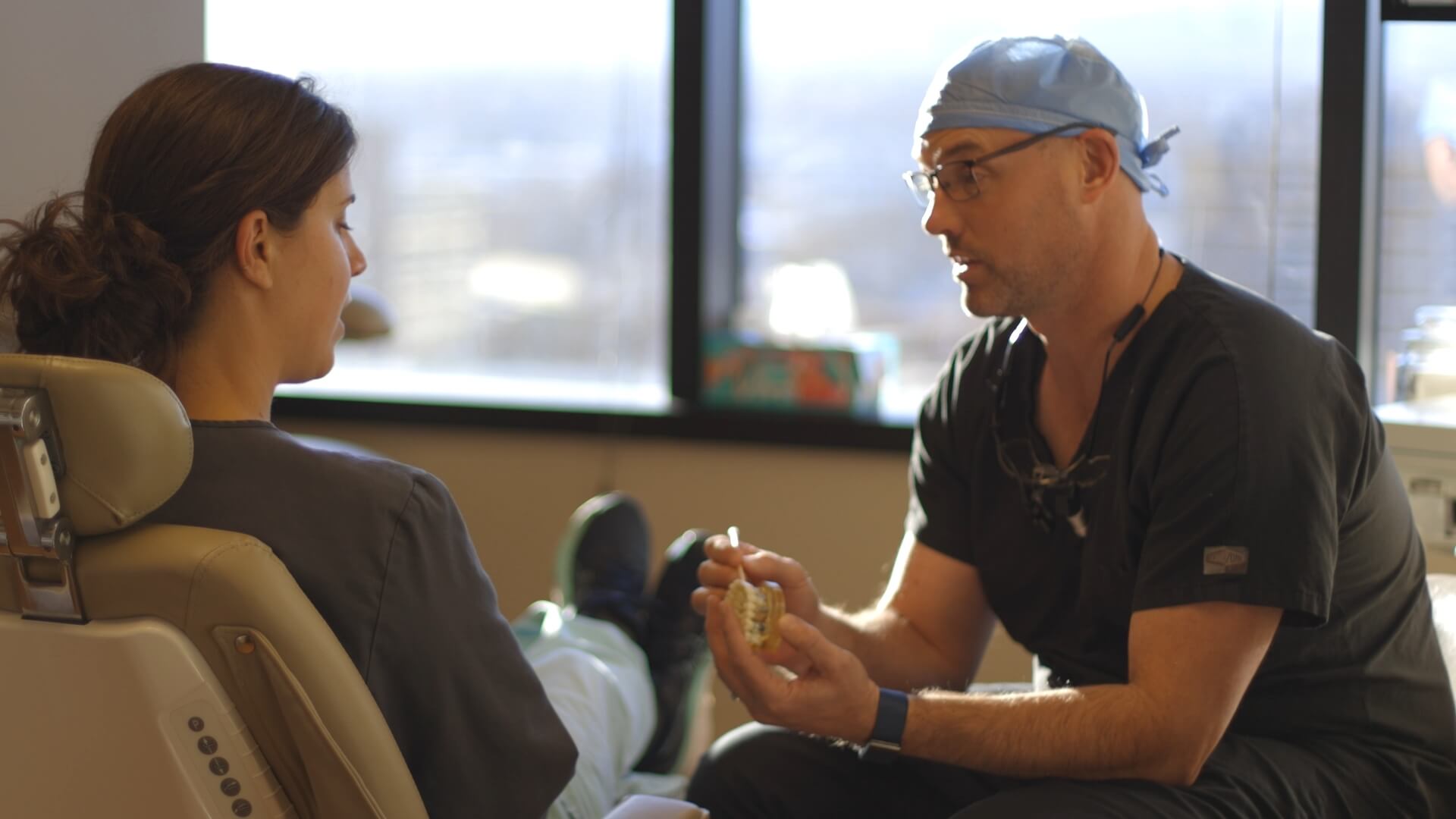
Donor tissue and your own tissue both rebuild the gumline with a graft, while pinhole surgery lifts your existing gum and places collagen strips beneath it. Pinhole surgery needs enough healthy gum tissue to work, so patients with severe recession and active gum disease may be better candidates for a graft. Your exam shows how much tissue you have to work with.
Most of our gum grafting procedures take between one and two hours, and your gums take about a week or two to heal completely.
Once the exposed roots are covered, a cold drink should stop being something you plan around.
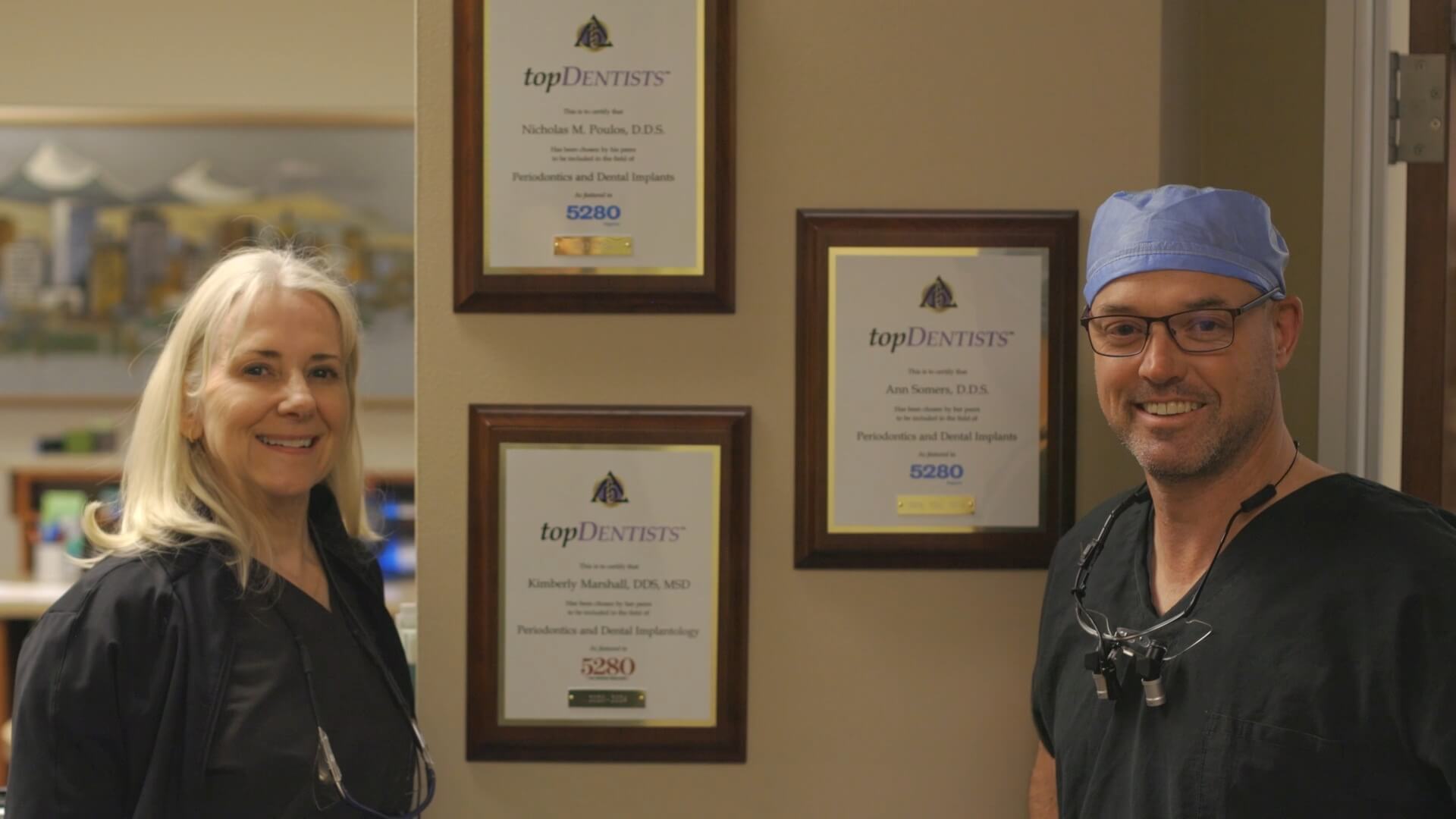
All three of your doctors, Dr. Somers, Dr. Nick, and Dr. Marshall, are board-certified in periodontics. Dr. Nicholas Poulos also lectures to dentists across the country on periodontal plastic surgery and on how biologics are used in periodontal regeneration, so gum surgery is a subject he teaches as well as one he performs. Dr. Kimberly Marshall taught at the University of Colorado for seven years before she specialized in periodontics.
Coverage varies by plan, and many policies cover gum grafting at least in part, so your insurer is the one to tell you what it will pay. Our practice is not contracted with insurance. We partner with LendingClub and CareCredit for payment plans, including up to 12 months with no interest for those who qualify. At your first visit, our front desk team reviews insurance and payment options with you before you leave our Denver office.


Most of our gum grafting procedures take between one and two hours, depending on how far the recession extends and the type of graft. You go home shortly afterward. If you have added sedation, you will need a ride home, because it is not safe to drive.
Yes, in one way that matters. A graft from your own mouth means tissue is taken from the roof of your mouth, so you heal in two places. Donor tissue comes from a donor instead. Our periodontists can use either one to cover exposed roots, and your first exam shows which one fits.
No. Gum tissue does not regrow on its own once it has receded, which is why treatment matters. A graft rebuilds it, and pinhole surgery is an option for some patients who still have enough healthy tissue. Dr. Somers, Dr. Nick, or Dr. Marshall will tell you which applies after your exam.
Coverage varies by plan, and many policies cover gum grafting at least in part, so your insurer can tell you what it will pay. We are not contracted with insurance. We do offer LendingClub and CareCredit payment plans, including up to 12 months with no interest for those who qualify.
You have been working around receding gums, and you would rather not trade them for a sore spot on the roof of your mouth. At your first visit, Dr. Somers, Dr. Nick, or Dr. Marshall examines your gums and bite, talks you through what they find, and explains whether donor tissue is an option for you before you decide anything. Call us, and we will find you a time that fits.


You are numb during the procedure, and sedation is available if you want it. Afterward your gums may feel tender for a few days, which anti-inflammatory pain medication can relieve. Gums take about a week or two to heal completely, and we give you instructions for caring for them as they heal.